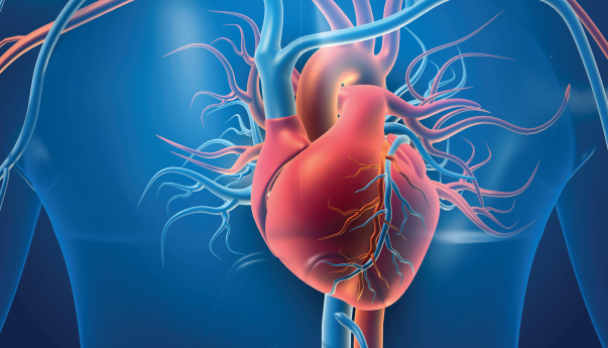



Cardiology

Dr Linda Calabresi
Clinical Articles iconClinical Articles

Advances in reperfusion and clot retrieval have dramatically altered the outcome for ischaemic stroke patients, but time to treatment is still the critical factor.

Prof Andrew Sindone
Podcasts iconPodcasts

Insight and understanding into how to identify and assess complications of DOACs, and, importantly, how adverse effects of DOACs can be best managed.

Healthed
Clinical Articles iconClinical Articles

At least 27,000 fewer Heart Health Checks were delivered by GPs between March 2020 & July 2021 due to the pandemic

Expert/s: Healthed
Prof David Playford
Podcasts iconPodcasts

Why is coronary calcium score so important? Prof Playford, will explain why coronary CT is the single best test to identify the presence of coronary atherosclerosis, which is the actual pathology that causes AMI.

Dr Linda Calabresi
Clinical Articles iconClinical Articles
Dr Linda Calabresi
Clinical Articles iconClinical Articles
Columbia University Irving Medical Center
Clinical Articles iconClinical Articles

Due to it's perceived greater efficacy and the greater body of evidence supporting its use, chlorothalidone is preferred over hydrochlorothiazide for treatment of hypertension. A new study, recently published in JAMA Internal Medicine, may have cast this guideline into doubt.

A/Prof John Amerena
Monographs iconMonographs

SGLT2 inhibitors are rapidly becoming seen as cardiac drugs in their own right, above and beyond their role in diabetes.

Ohio University
Clinical Articles iconClinical Articles

Low-density lipoproteins (LDL), the kind of cholesterol found in fast food, processed meats and desserts, has come to be known as 'bad' cholesterol due to it's association with heart attacks and coronary disease.Despite this, 75% of heart attacks occur in patients whose cholesterol levels don't indicate they're at high risk, leading many to suspect the link isn't as simple as initially thought. Researchers at Ohio University may have just figured out why.

Dr Linda Calabresi
Clinical Articles iconClinical Articles

This week’s valuable resource award is a little different to the usual.Rather than a handy algorithm or useful assessment tool, this is, in fact an article from a recent Australian Prescriber.It’s about all the potential complications and side effects that can potentially occur with amiodarone, that reasonably popular drug that tends to get started in patients with AF and ventricular arrhythmias.In fact, the list of potential side-effects is quite extensive and not all that intuitive, particularly in elderly patients, which is why having this article bookmarked somewhere to be able to access at a moment’s notice is such a good idea.

Dr Stephen Gordon
Monographs iconMonographs

This article summarises, in the light of recent research, the current benefits and disadvantages of prescribing low-dose aspirin.

Dr Linda Calabresi
Clinical Articles iconClinical Articles

To ablate, or not to ablate? That is the question.That’s what international researchers were investigating in two studies just published in The Journal of the American Medical Association.And the answer? As so often happens in medicine, the answer is: it depends.Looking at the two studies, patients with symptomatic atrial fibrillation had a greater improvement in their quality of life at the one year mark if they had undergone catheter ablation than if they had been treated with medical treatment alone.But not to diminish the importance of quality of life as a measure of success, other findings from the latest research are also worth noting.In the larger of the two studies, a randomised controlled controlled trial of over 2200  patients presenting with symptomatic AF, researchers found after four years of follow-up that there was no significant difference in mortality between the group who had received catheter ablation and those who were treated with drug therapy alone. Similarly, the rate of disabling stroke, serious bleeding and cardiac arrest were the same between the two groups.As one would expect there was a higher rate of AF recurrence among the drug therapy group as compared with the catheter ablation group (70% vs 50%), however that 50% recurrence rate among those who’d undergone the ablation procedure is still pretty high and overall among that intervention group 19.4% underwent a repeat procedure.But the study authors who came from 10 different countries did not seem too deflated by the result. While their study failed to show benefit for catheter ablation in any of the primary outcomes such as death or stroke they did find some advantage in terms of secondary outcomes, including quality of life. They also point to a trend toward benefit of the procedure even if that benefit wasn’t large enough to reach clinical significance.The other JAMA study involved just 155 patients who had symptomatic paroxysmal or persistent AF and who were randomised to receive either catheter ablation or drug therapy. The Scandinavian researchers were particularly assessing their symptoms and their quality of life.After four years, the catheter ablation group ‘produced 14% more patients who achieved complete or near complete relief from their AF symptoms.’What’s more the quality of life improved for patients in both groups. However, the improvement was greater in the ablation group.So, what does it all mean?Firstly, it needs to be pointed out that, in keeping with the guidelines the majority of patients included in these trials were symptomatic – only 10% were asymptomatic. In other words, there have to be symptoms or another very good reason to consider ablation in a patient with AF.Secondly, overall, the ablation group was more successful than the drug therapy group in relieving those symptoms.As an accompanying editorial puts it:“For patients with symptoms, in whom quality of life is impaired by AF, catheter ablation can improve quality of life to a greater extent than drug therapy.However, patients who choose drug therapy will also likely experience significant improvements in quality of life and have no worse risk for the most concerning complications of AF, stroke and death. Thus, there is no mandate for these patients to undergo catheter ablation at this time.”And that’s where we’re at.

Reference:

Packer DL, Mark DB, Robb RA, Monahan KH, Bahnson TD, Poole JE, et al. Effect of Catheter Ablation vs Antiarrhythmic Drug Therapy on Mortality, Stroke, Bleeding, and Cardiac Arrest Among Patients With Atrial Fibrillation: The CABANA Randomized Clinical Trial. JAMA. 2019 Mar 15. DOI: 10.1001/jama.2019.0693 [Epub ahead of print]Mark DB, Anstrom KJ, Sheng S, Piccini JP, Baloch KN, Monahan KH, et al. Effect of Catheter Ablation vs Medical Therapy on Quality of Life Among Patients With Atrial Fibrillation: The CABANA Randomized Clinical Trial. JAMA. 2019 Mar 15. DOI: 10.1001/jama.2019.0692 [Epub ahead of print]Albert CM, Bhatt DL. Catheter Ablation for Atrial Fibrillation: Lessons Learned From CABANA. JAMA. 2019 Mar 15. DOI: 10.1001/jama.2018.17478 [Epub ahead of print]Blomström-Lundqvist C, Gizurarson S, Schwieler J, Jensen SM, Bergfeldt L, Kennebäck G, et al. Effect of Catheter Ablation vs Antiarrhythmic Medication on Quality of Life in Patients With Atrial Fibrillation: The CAPTAF Randomized Clinical Trial. JAMA. 2019 Mar 19; 321(11): 1059-68. DOI: 10.1001/jama.2019.0335